

Grand Feu Enamel Dial Technique
In the highest sphere of watchmaking, where mechanical virtuosity meets artistic permanence, the Grand Feu enamel dial stands as one of the most demanding and revered expressions of craftsmanship. It is not merely a decorative technique; it is an alchemical transformation of raw minerals into vitreous depth — achieved through fire, patience, and absolute precision.
A grand feu enamel dial watch is not defined by fashion or trend. It is defined by permanence. Unlike lacquer or galvanic treatments, true enamel will not fade, oxidize, or discolor with time. Its brilliance is not applied — it is fused into being at temperatures exceeding 800°C. The result is a surface of incomparable luminosity, a depth that appears almost liquid, and a clarity that endures for generations.
In the realm of the enamel dial Swiss watch, Grand Feu represents the most technically exacting and historically authentic method of dial creation.
Origins of Grand Feu Enameling
The art of enameling dates back over three millennia, yet its application to horology flourished in Switzerland during the 17th and 18th centuries. Geneva and Neuchâtel became centers of miniature enamel painting, while pocket watches of the era often featured richly decorated enamel cases and dials.
The term Grand Feu — “great fire” — refers to the high-temperature kiln firing required to vitrify enamel powder into a glass-like surface. Unlike cold enamel or epoxy substitutes, Grand Feu enamel undergoes repeated kiln firings at temperatures typically ranging between 780°C and 900°C.
Each firing permanently fuses the enamel to its metal base. Each firing also carries risk. Warping, cracking, bubbling, or chromatic shifts may render a dial unusable. Success rates can fall below 50 percent, particularly for complex multi-layer or painted enamel compositions.
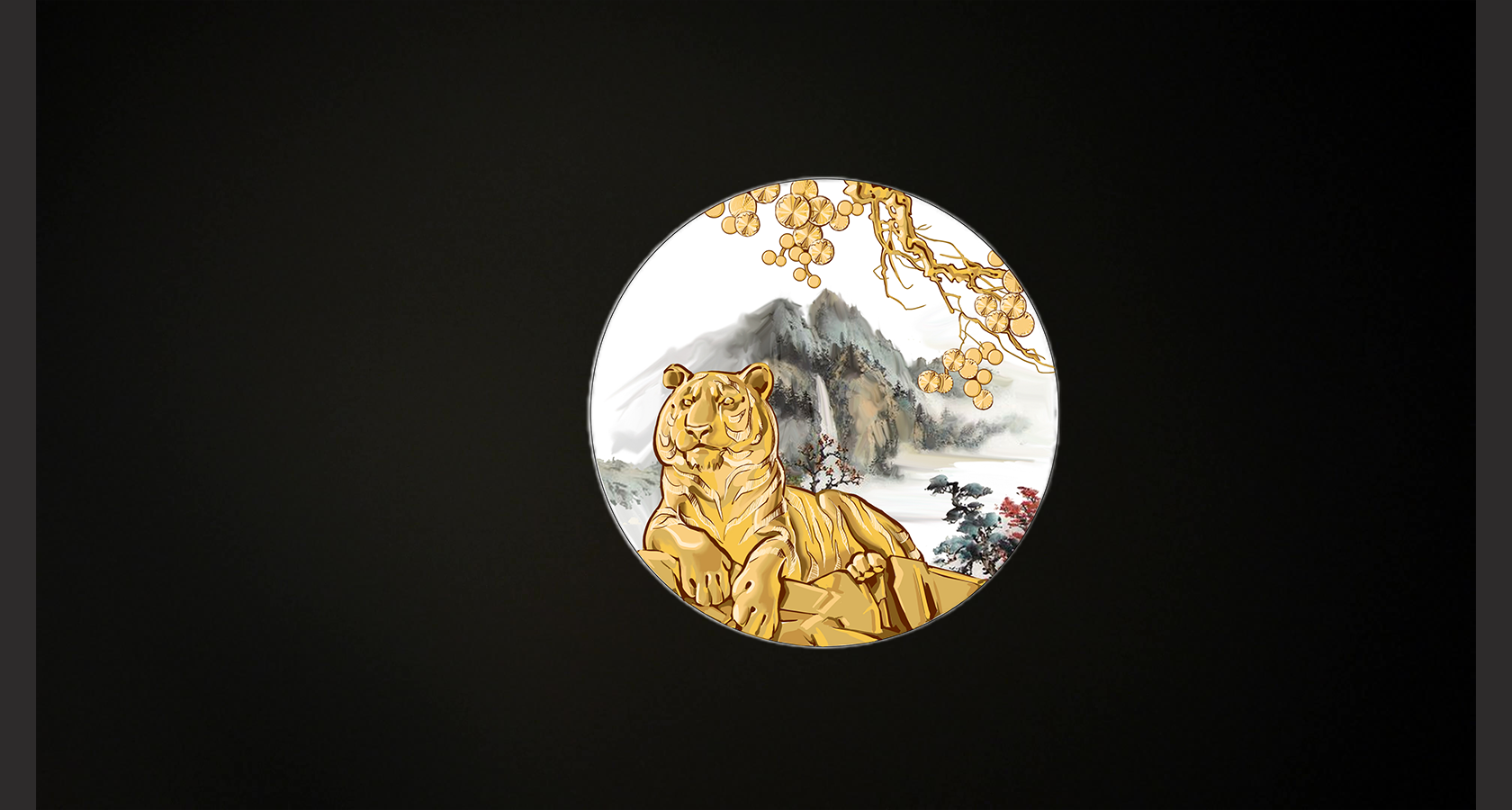
The Material Science of Enamel At its essence, enamel is finely ground glass composed primarily of:
Unlike organic coatings, enamel does not degrade under ultraviolet exposure. Its color stability is inherent to its mineral composition. |
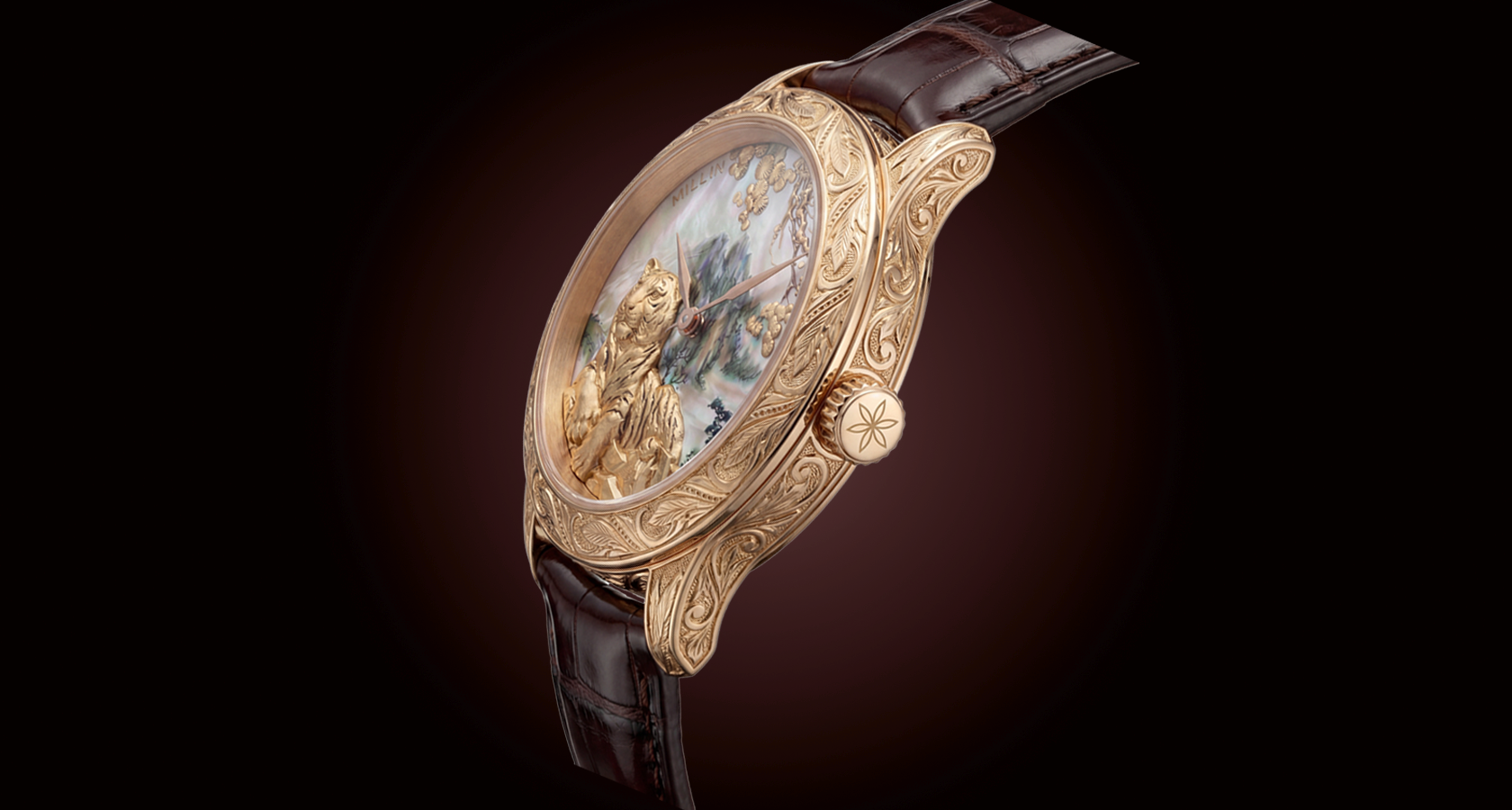
Substrate Preparation A Grand Feu enamel dial begins with a metal base, typically:
The surface is cleaned ultrasonically and degreased to ensure optimal adhesion. Even microscopic contamination can cause blistering. |
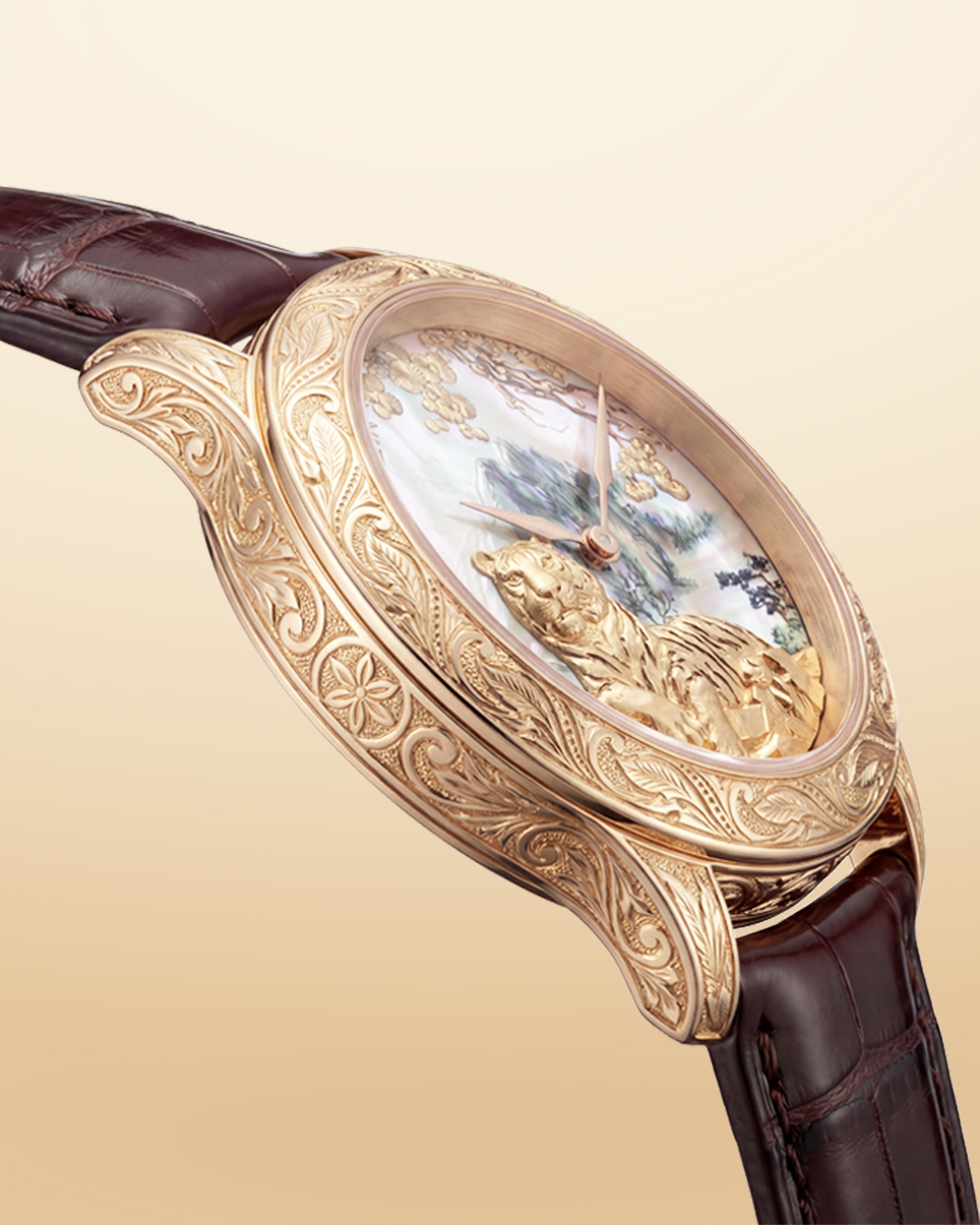
Application of Enamel Layers The enamel powder is mixed with distilled water to create a fine slurry. Using a small spatula or brush, the artisan applies an initial base coat — often referred to as fondant. The dial is then placed on a firing trivet and introduced into a preheated kiln. First Firing
Subsequent layers are applied sequentially. Each layer increases opacity and depth. A traditional white Grand Feu dial may require 6–12 separate firings. Each firing slightly reduces thickness due to material flow and micro-level contraction. The cumulative enamel thickness typically ranges between 0.3 mm and 0.6 mm. |
Thermal Risk and Failure Rates
Grand Feu enamel is inherently unpredictable. During firing:
- Air pockets may expand and burst.
- Differential expansion between enamel and metal may cause cracking.
- Pigments may alter hue under extreme heat.
In haute horlogerie production, rejection rates for enamel dials can exceed 30–40 percent. In miniature enamel painting, rates may rise even higher.
Surface Finishing and Polishing
Once the desired thickness and opacity are achieved, the dial surface is gently ground using ultra-fine abrasives to achieve perfect flatness. This step ensures that light reflects evenly across the vitreous plane.A final firing — known as the glaze firing — restores gloss and seals microscopic surface irregularities.
The resulting surface possesses extraordinary depth. Under magnification, it reveals no pores, no grain, no visible brush strokes. Its brilliance appears internal rather than applied.
Dial Variations in Grand Feu
1. White Grand Feu
The most classical expression. Pure, luminous, timeless. Often paired with fired enamel Roman numerals or printed black chemin-de-fer minute tracks.
2. Flinqué
A guilloché metal base is engraved prior to enameling. Transparent enamel layers are applied, allowing the engraved pattern to refract through the vitreous surface. The result is dynamic optical depth.
3. Champlevé
Cells are carved into the metal substrate and filled with enamel. After firing, the surface is polished flush.
4. Cloisonné
Fine gold wires form compartments filled with colored enamel. Each color requires separate firings.
Each of these techniques may be integrated into a grand feu enamel dial watch, depending on artistic direction.
Dial Apertures and Mechanical Precision
Unlike painted brass dials, enamel dials must accommodate:
- Date windows
- Moonphase apertures
- Power reserve indicators
- Tourbillon openings
After firing, edges are inspected and refined under magnification. Any fracture near an aperture may propagate over time, rendering the dial structurally unstable.
Tolerance management between dial thickness and applied indices is equally critical. Hand-applied gold markers must be riveted or soldered with care to avoid stress cracks.
Fired Numerals and Signature Printing
Traditional enamel dial Swiss watches often feature:
- Fired Arabic or Roman numerals
- Enamel railway minute tracks
- Brand signatures executed in enamel
Each additional firing introduces renewed risk.
Longevity and Chemical Stability
Grand Feu enamel is chemically inert. It resists:
- UV radiation
- Humidity
- Oxidation
- Chemical discoloration
This permanence explains why antique enamel pocket watches from the 18th century often display remarkable visual clarity today.
Enamel’s vitreous structure produces a distinctive acoustic response. When lightly tapped prior to casing, a properly fired enamel dial emits a subtle, high-pitched resonance indicative of structural integrity.
Its tactile quality is equally unique — smooth, cool, and glass-like. Under oblique light, it reflects with a softness unattainable through synthetic coatings.
Integration with Haute Horlogerie Movements
In a high-complication timepiece, the enamel dial must harmonize with the mechanical architecture beneath it.
Dial feet positioning is calibrated precisely to align with mainplate tolerances. Given enamel’s fragility, dial attachment must ensure secure mounting without excessive torque on fixing screws.
Before final casing, the movement undergoes amplitude and rate testing to confirm that dial installation has introduced no positional distortion.
Time Investment
The creation of a single Grand Feu dial may require:
- 10–20 hours for simple monochrome execution
- 40–80 hours for flinqué or champlevé
- 100+ hours for cloisonné or miniature painting
The Collector’s Perspective
A grand feu enamel dial watch offers a visual experience distinct from any other dial medium. Its luminosity does not rely on gloss or reflectivity alone; it emanates from the interplay of light within layered glass.
Viewed under natural daylight, enamel reveals extraordinary purity. Under candlelight, it acquires warmth and depth. It ages without aging.
For collectors, this permanence carries emotional resonance. It is an assertion that beauty may outlast the era in which it was created.
Swiss Mastery
The enamel dial Swiss watch tradition remains concentrated within specialized ateliers, often independent from large-scale production facilities. The scarcity of trained enamel artisans underscores the exclusivity of true Grand Feu execution.
Master enamelers typically undergo years of apprenticeship. Kiln control, pigment behavior, and thermal timing cannot be reduced to formula alone; they demand intuition born of repetition.
In haute horlogerie, enamel is not outsourced decoration. It is an integrated craft discipline, aligned with movement finishing, case construction, and overall aesthetic philosophy.
Conclusion
Grand Feu enameling is among the most demanding techniques in horology. It subjects fragile mineral layers to extreme heat in pursuit of absolute permanence. It tolerates no haste, no compromise, no imperfection.
Within a grand feu enamel dial watch, time is framed by fire-forged glass — luminous, immutable, eternal.
In a world of accelerating production and ephemeral materials, the enamel dial Swiss watch remains a declaration of devotion: to craft, to heritage, and to the enduring beauty of time rendered in fire.
